
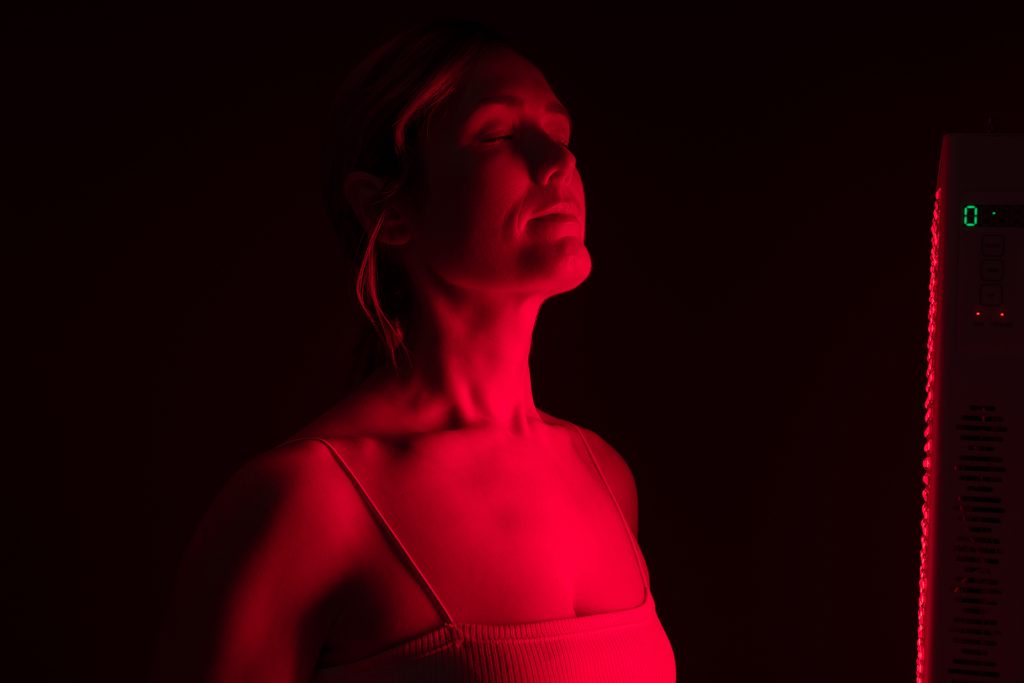
Photobiomodulation—often called red light therapy—isn't a wellness trend. It's a clinically studied intervention that works at the cellular level, specifically targeting mitochondria to enhance energy production, reduce inflammation, and support tissue repair.
But understanding how it works requires looking beyond marketing claims and into the actual mechanisms: what specific wavelengths of light do to cytochrome c oxidase, ATP synthesis, and cellular signaling pathways.
At Mancuso Clinic, we use clinical-grade photobiomodulation not as a standalone treatment, but as part of a comprehensive approach to metabolic health, recovery, and longevity optimization.
What Photobiomodulation Actually Is
Photobiomodulation (PBM) is the scientific term for what many call red light therapy. It involves exposing tissues to specific wavelengths of red (600-700 nm) and near-infrared light (700-1100 nm) that penetrate skin and interact with cellular structures—primarily mitochondria.
These wavelengths don't generate heat like infrared saunas. They don't damage tissue like UV light. Instead, they stimulate biological processes that enhance cellular function, particularly energy production and inflammation modulation.
The key target? Cytochrome c oxidase, an enzyme in the mitochondrial respiratory chain that plays a critical role in ATP (adenosine triphosphate) production—the energy currency of every cell in your body.
How Red Light Affects Mitochondrial Function
Mitochondria are often called the powerhouses of the cell, but that's an oversimplification. They're metabolic hubs that regulate energy production, oxidative stress, cell signaling, and apoptosis (programmed cell death).
When red and near-infrared light photons are absorbed by cytochrome c oxidase, several things happen:
Increased ATP Production
Photobiomodulation enhances the efficiency of the electron transport chain, which directly increases ATP synthesis. PBM's interaction with mitochondria boosts ATP production and regulates cellular stress responses, giving cells more energy to perform their functions—whether that's muscle contraction, tissue repair, immune response, or metabolic regulation.
This is particularly relevant for individuals dealing with chronic fatigue, slow recovery, or metabolic dysfunction where cellular energy production is compromised. If you're interested in how energy production affects morning function, our article on morning energy and metabolic health explores this connection further.
Reduction of Oxidative Stress
While reactive oxygen species (ROS) are often discussed as harmful, they also play essential signaling roles. PBM modulates ROS in a biphasic manner—low doses stimulate beneficial signaling pathways, while reducing excessive oxidative damage that contributes to inflammation and tissue degradation.
Nitric Oxide Release
Red light can dissociate nitric oxide (NO) from cytochrome c oxidase, temporarily increasing NO availability. Nitric oxide is a vasodilator—it improves blood flow, enhances oxygen delivery to tissues, and supports cardiovascular function.
Improved circulation means better nutrient delivery, faster waste removal, and enhanced tissue repair—all critical for recovery and performance.
"Photobiomodulation doesn't force the body to do something unnatural. It enhances what mitochondria are already designed to do—produce energy efficiently and regulate cellular health."
Red Light Therapy for Skin Health and Rejuvenation
One of the most well-studied applications of photobiomodulation is skin health. Red and near-infrared light have been shown to increase collagen and elastin production, improve skin tone and texture, and accelerate wound healing.
The mechanisms are mitochondrial. Fibroblasts—the cells responsible for collagen synthesis—respond to PBM by increasing their metabolic activity. More ATP means more collagen production. Improved circulation means better delivery of nutrients needed for skin repair.
Clinical studies have documented reductions in fine lines, improved skin elasticity, and faster healing of acne, scars, and other skin conditions with consistent photobiomodulation exposure.
Research shows that red and near-infrared light interact with skin at the cellular level, activating signaling pathways that enhance healing and skin metabolism—this isn't cosmetic surface treatment, it's cellular-level tissue remodeling.
Photobiomodulation and Fat Metabolism
Emerging research suggests that photobiomodulation may influence adipose (fat) tissue at the cellular level. A clinical study on obese women found that PBM stimulated mitochondrial processes in fat tissue that could support lipolysis (fat breakdown) and cell apoptosis—biological steps involved in fat regulation.
It's important to clarify: red light therapy is not a magic fat-burning tool. It doesn't replace nutrition or exercise. But it may support metabolic processes that make fat loss more efficient when combined with appropriate dietary and activity interventions.
Fitness professionals and researchers have explored PBM's role in weight management programs—most effective protocols pair red light exposure with structured nutrition and exercise, leveraging mitochondrial energy enhancement and metabolic support.
At Mancuso Clinic, our Body Transformation Assessment includes red light therapy as part of a comprehensive approach—not as a standalone solution, but as a metabolic enhancement tool alongside personalized nutrition and movement strategies.
If metabolic adaptation is affecting your weight loss efforts, our article on why weight loss becomes harder each time you diet explains the underlying patterns.
Pain Relief, Recovery, and Inflammation Reduction
Perhaps the most robust clinical evidence for photobiomodulation comes from pain and recovery research. Systematic reviews and meta-analyses have shown that PBM can significantly reduce pain—particularly chronic low back pain, osteoarthritis, and musculoskeletal injuries—while accelerating tissue repair and muscle regeneration and improving post-exercise recovery.
The mechanisms are multifaceted:
- Reduced inflammation – PBM modulates inflammatory cytokines, shifting the balance from pro-inflammatory to anti-inflammatory signaling
- Enhanced tissue repair – Increased ATP production supports fibroblast activity, collagen synthesis, and wound healing
- Pain signal modulation – Improved circulation and reduced oxidative stress can dampen pain perception at the cellular level
- Faster recovery – Athletes and active individuals report reduced muscle soreness and quicker return to training after PBM exposure
For patients dealing with chronic pain that intensifies at night, understanding the underlying inflammatory patterns is critical. Our article on why pain feels worse at night explores how inflammation and cortisol rhythms affect pain perception.
At Mancuso Clinic, we often combine photobiomodulation with osteopathic treatment to address both structural restrictions and cellular-level inflammation—creating a comprehensive approach to pain relief and recovery.
Energy Levels and Systemic Recovery
If you feel depleted—not just tired, but systemically drained—photobiomodulation may support cellular energy restoration in ways that rest alone cannot.
When mitochondrial function is compromised (whether from chronic stress, poor sleep, nutritional deficiencies, or metabolic dysfunction), ATP production suffers. This shows up as fatigue, brain fog, slow recovery from exercise, and difficulty handling stress.
PBM doesn't give you energy the way caffeine does—it supports the cellular machinery that produces energy naturally. Over time, with consistent exposure, this can translate to improved stamina, better mental clarity, and faster recovery from physical and metabolic stressors.
This is particularly relevant for individuals whose bodies don't restore themselves overnight. If rest doesn't leave you feeling recovered, that's a sign of deeper metabolic or mitochondrial dysfunction that may benefit from targeted interventions like photobiomodulation.
Pairing Red Light Therapy with Vibration Plate Training
An emerging trend in performance and recovery optimization is combining photobiomodulation with whole-body vibration (WBV) training. The pairing makes physiological sense:
- Red light enhances cellular energy – PBM increases ATP production and mitochondrial efficiency
- Vibration stimulates muscle activation – WBV triggers rapid muscle contractions, improving strength, circulation, and lymphatic drainage
- Combined effect on circulation – Both modalities improve blood flow, which enhances nutrient delivery and waste removal
- Synergistic recovery support – Red light reduces inflammation while vibration stimulates tissue repair and muscle conditioning
At Mancuso Clinic, we're seeing this combination gain traction among clients focused on body composition, recovery, and metabolic optimization. The vibration plate provides mechanical stimulus while red light provides cellular-level metabolic support—addressing both movement and energy production simultaneously.
This isn't just a wellness fad. It's a strategic pairing of evidence-based modalities that target different but complementary aspects of metabolic and physical performance.
Science-Based Body Transformation Assessment
Includes: Full body composition scan, 1-on-1 consultation, trial red light therapy session, and a custom transformation plan. No surgery. No downtime. Just cellular-level optimization.
Claim Your $99 AssessmentPhotobiomodulation Is Cellular-Level Optimization
Red light therapy works because it targets the fundamental machinery of cellular function—mitochondria. It doesn't mask symptoms or force the body to do something unnatural. It enhances what cells are already designed to do: produce energy, regulate inflammation, and repair tissue.
Whether you're dealing with chronic pain, slow recovery, skin concerns, metabolic dysfunction, or simply want to optimize performance and longevity, photobiomodulation offers a clinically validated tool backed by hundreds of peer-reviewed studies.
At Mancuso Clinic, we don't use red light therapy in isolation. We combine it with comprehensive assessment—through metabolic testing, structural evaluation, and personalized protocols—so you're not just exposing yourself to light, but strategically enhancing the systems that matter most for your goals.
If you're ready to experience what cellular-level optimization feels like, our Body Transformation Assessment is designed to give you clarity, a trial session, and a targeted plan. This isn't wellness theater—it's science-backed intervention tailored to your body.
Questions? Reach out and let's map your path forward.