
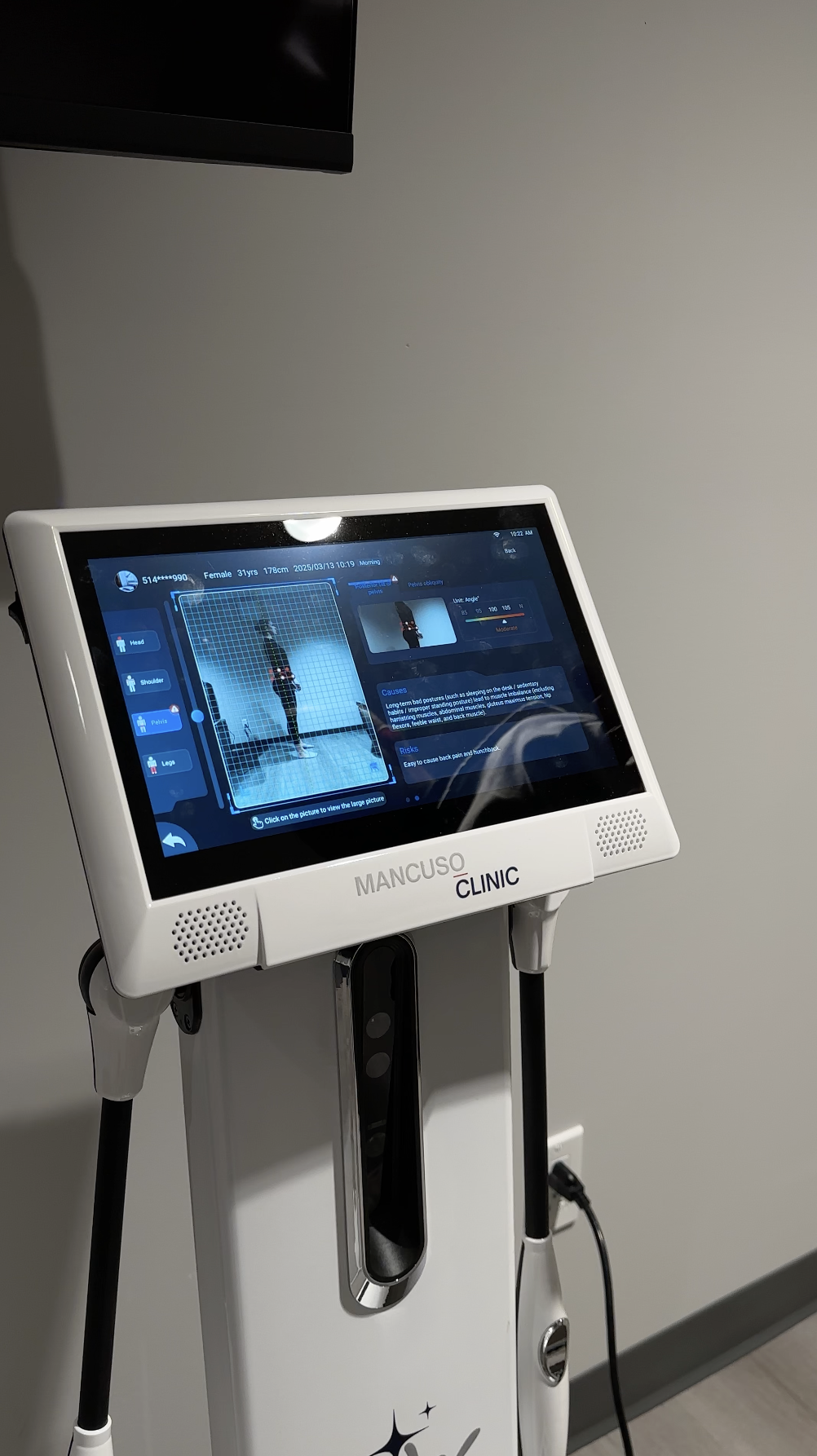
A scale can tell you that your weight changed. A tape measure can tell you that your waist changed. Neither can show where those changes are occurring, how your posture is adapting, or whether your training and recovery plan is actually moving you toward your goal. That is the real value behind a 3D body scanner review: not a novelty image of your body, but a clearer baseline for better decisions.
For people focused on pain relief, performance, body composition, or aging well, the question is not whether body data is useful. It is whether the data is accurate enough, relevant enough, and interpreted well enough to change what you do next.
What a 3D Body Scanner Actually Measures
A 3D body scanner uses cameras, sensors, and software to create a digital model of your body in seconds or minutes. Depending on the system, it can generate measurements for circumference, body shape, volume, waist-to-hip ratio, posture markers, and changes in surface dimensions over time.
This is different from a DEXA scan, which estimates bone density, fat mass, and lean mass using low-dose X-ray technology. It is also different from a smart scale, which generally estimates body composition through bioelectrical impedance. A 3D scan is primarily a measurement and visualization tool. It excels at documenting external body dimensions and tracking visible change with far more consistency than a home tape measure.
That distinction matters. If your priority is understanding bone health or obtaining a medical-grade estimate of visceral fat, a 3D scan is not a replacement for the appropriate clinical test. If you want a repeatable way to monitor changes in waist size, body shape, posture, and proportional measurements, it can be a highly useful part of a broader assessment.
Where 3D Body Scanning Delivers Real Value
The best use of 3D body scanning is longitudinal tracking. One scan is a snapshot. A series of scans taken under consistent conditions can reveal whether a nutrition plan, strength program, recovery protocol, or pain-management strategy is producing meaningful change.
For body composition goals, the visual record can be more motivating than scale weight alone. Someone may gain muscle while reducing body fat and see little movement on the scale. A 3D scan can show a reduced waist measurement, improved proportions, or measurable changes in torso and limb circumference that reinforce the value of the plan.
For active adults and athletes, the scan can also expose asymmetries worth investigating. A shoulder sitting higher than the other, a persistent trunk shift, or uneven development between limbs does not automatically identify the cause of pain. But it can prompt a more complete hands-on assessment. That is a far better starting point than guessing why one hip feels restricted or why one side of the body is consistently overloaded.
There is also practical value in having objective milestones. Meaningful improvement becomes easier to evaluate when paired with measurable change. If back pain has improved, for example, a clinician can compare movement quality, posture, training tolerance, wearable recovery data, and scan measurements instead of relying on a single subjective marker.
Accuracy Depends on the Question You Are Asking
A common mistake is asking whether a 3D body scanner is "accurate" without defining accurate for what. The answer depends on the metric and the protocol.
Most quality scanners can produce highly consistent circumference and shape measurements when the same person is scanned under similar conditions. That makes them valuable for trend tracking. Consistency is often more useful than chasing a supposedly perfect number, especially when the goal is to adjust a real-world health plan over weeks or months.
However, the numbers can be affected by hydration, food intake, clothing, body position, breathing, time of day, and the system's software algorithm. A scan after a large meal, an intense workout, or a long flight may not be comparable to a scan taken first thing in the morning under rested conditions.
The strongest protocol is simple: wear consistent fitted clothing, use the same scanner, stand in the same position, and repeat scans at a similar time of day. This reduces noise so that the changes you see are more likely to reflect actual progress.
What It Cannot Tell You On Its Own
A 3D image can look impressively detailed, but detail should not be confused with diagnosis. A scanner cannot confirm the source of low back pain, identify a disc injury, diagnose a metabolic condition, or tell you exactly how much muscle tissue you have gained.
It also should not be used to create anxiety around minor day-to-day body fluctuations. Bodies change with sodium intake, sleep, stress, menstrual cycle phase, training load, and digestion. The signal is found in the trend, not in one scan result.
For this reason, the scanner is most valuable when it is part of a clinical system. Body data needs context from movement assessment, health history, pain patterns, metabolic markers, recovery metrics, and training demands.
The Difference Between Data Collection and a Useful Protocol
A 3D scan is only as valuable as the action it creates. Many people have had a scan, received a colorful report, and never changed anything meaningful afterward. That is data collection, not precision care.
A more effective process starts with a clear goal. If your goal is pain-free training, the scan may be used alongside a movement screen and manual assessment to identify asymmetries that deserve attention. If your goal is fat loss without losing performance, scan measurements may be paired with metabolic testing, nutrition targets, strength training, and sleep data. If your goal is healthy aging, the scan can help track body-shape changes while you build muscle, improve mobility, and manage recovery capacity.
At Mancuso Clinic, 3D body scanning can be integrated with hands-on care, performance testing, and personalized health data to build a plan around the root cause rather than a generic recommendation. The scan is not the treatment. It is one of the tools that helps make treatment more precise.
Who Benefits Most From a 3D Body Scan?
A 3D body scan makes the most sense for people who want objective feedback and are willing to use it consistently. It is especially useful for someone rebuilding after pain, working through a performance plateau, changing body composition, or creating a measurable longevity strategy.
It can be particularly helpful when scale weight has become frustrating or misleading. A professional with a demanding schedule may be training consistently but seeing little change in pounds. Scan trends can provide a more complete picture of whether their waist measurement, posture, or body proportions are moving in the right direction.
It may be less valuable for someone seeking a one-time answer about their health. If you do not plan to rescan or act on the findings, a detailed body scan may not offer much more than a moment of curiosity. In that case, your resources may be better directed toward the assessment or intervention most closely tied to your immediate concern.
What to Look For Before Booking
Before scheduling a scan, ask how the results will be interpreted and what happens next. The technology matters, but the clinical process matters more.
Look for a provider who can explain which measurements are useful for your goal, how they standardize repeat testing, and how the findings connect to an actual plan. That plan may include manual therapy for movement restrictions, strength and mobility work, nutrition adjustments, recovery interventions, or further testing when the data points to a deeper issue.
Avoid providers who present a single body-fat estimate as an unquestionable verdict. Any body-composition measurement has limitations. A credible clinician will discuss trends, acknowledge the margin of error, and use multiple inputs before making recommendations.
Is a 3D Body Scanner Worth It?
For the right person, yes. A 3D body scanner is worth it when it replaces guesswork with repeatable measurements and supports a plan you will actually follow. It is less worthwhile when treated as entertainment, a one-off scorecard, or a substitute for clinical evaluation.
Your body is not a static number. It is a changing system shaped by movement, stress, sleep, nutrition, training, injury history, and recovery. The most useful scan is the one that helps you see that system more clearly, choose the next right intervention, and prove that your effort is producing change.
See Your Body Data With Clarity
A 3D body scan gives you precise, repeatable measurements of your body shape, posture, and proportions. See exactly where change is happening and use the data to refine your plan.
Book Your Body ScanWant to know more? Discover which assessments are right for you