
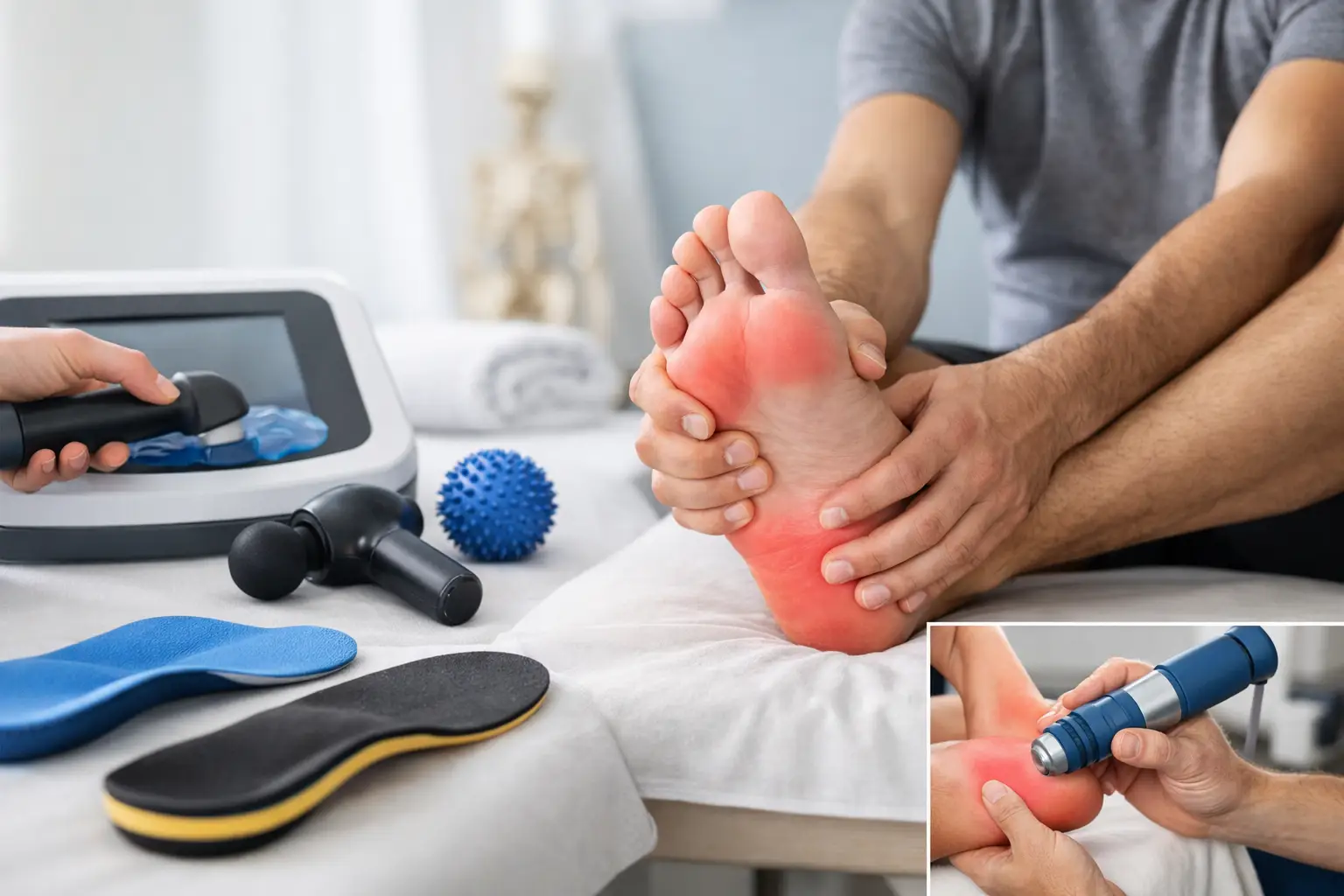
The first few steps out of bed should not dictate how you train, work, travel, or move through the day. Yet stubborn heel pain has a way of doing exactly that. The best therapies for stubborn plantar fasciitis are rarely about finding one magic tool. They are about identifying why the plantar fascia keeps being overloaded, then building a recovery plan that restores tissue capacity without forcing you to put your life on pause.
Plantar fasciitis is commonly felt as a sharp or aching pain under the heel, often most noticeable with the first steps after rest. Plantar fasciitis accounts for about 11% to 15% of clinical foot symptoms requiring treatment, with approximately 10% of patients unable to be relieved by conservative therapy alone. For many people, it improves with basic self-care. When pain persists for months, keeps returning, or limits activity, the answer is usually more precision—not simply more stretching.
Why Plantar Fasciitis Becomes Stubborn
The plantar fascia is a thick band of connective tissue that supports the arch and helps transfer force from the foot to the ground. It is built to handle load. Problems develop when the load placed on it repeatedly exceeds its current capacity to recover. That mismatch can come from a sudden jump in running mileage, long shifts on hard floors, a change in footwear, reduced ankle mobility, calf weakness, or poor recovery from training.
Body weight, sleep quality, metabolic health, previous injuries, and movement mechanics can also influence how well the tissue tolerates stress. This is why two people can wear the same shoes or run the same distance and have very different outcomes. One may have the strength, ankle motion, recovery habits, and progressive loading plan to tolerate it. The other may be operating with a smaller margin for error.
Persistent heel pain also deserves a careful diagnosis. Nerve irritation, a heel fat pad problem, stress injury, arthritis, or pain referred from the calf or lower back can mimic plantar fasciitis. A root-cause assessment helps ensure that treatment is aimed at the right problem from the beginning.
The Best Therapies for Stubborn Plantar Fasciitis
The strongest approach combines therapies according to the person, the stage of irritation, and the demands they want to return to. A recreational runner, a nurse working 12-hour shifts, and an athlete in a training block may all need different versions of the same core plan.
Progressive Loading and Foot Strength
Complete rest can settle symptoms briefly, but it does not prepare the foot for the demands that triggered the pain. The goal is to find a tolerable level of loading and progress it over time. Calf raises, controlled heel-lowering exercises, and foot-strength work can improve the ability of the calf, ankle, and plantar fascia to absorb force. The right dose matters. Exercises that are too aggressive can flare pain; exercises that are too easy may not create enough adaptation.
A clinician can use symptoms, strength testing, and movement quality to set a starting point and progress it with purpose. Pain is useful data here, not a challenge to ignore. Mild, temporary discomfort may be acceptable during a progressive program. Sharp pain, escalating symptoms, or worse first-step pain the next morning suggests that the previous dose was too much.
Calf Mobility and Targeted Manual Therapy
Limited ankle dorsiflexion, meaning the ability to bring the shin forward over the foot, can increase strain through the plantar fascia during walking, squatting, and running. Calf mobility work may help when a stiff calf or ankle is part of the pattern. But indiscriminate stretching is not a complete solution, especially when the tissue is highly irritable.
Manual therapy can address restrictions in the foot, ankle, calf, and surrounding kinetic chain while providing short-term symptom relief and improving movement options. Osteopathic and chiropractic assessment can be particularly valuable when hip mechanics, pelvic control, spinal movement, or a prior injury is changing how force travels into the foot. Hands-on care works best as part of an active plan. Relief after treatment should create an opportunity to retrain stronger movement, not become a temporary reset between flare-ups.
Shock Wave Therapy for Chronic Cases
Shock wave therapy is not a shortcut around rehabilitation. Results are generally strongest when it is paired with progressive strengthening, sensible activity modification, and a clear plan for returning to higher-impact exercise. Some people experience temporary soreness after treatment, and timing matters. It may not be the first choice for a newly irritated heel that has not yet had a structured loading program.
Footwear, Orthotics, and Short-Term Support
Shoes and orthotics do not fix every case, but they can reduce aggravating load while the foot rebuilds capacity. A supportive, stable shoe may make a meaningful difference for someone spending long hours walking or standing. Temporary arch support or a heel cup may also improve comfort enough to keep daily movement manageable.
The trade-off is that support should not become the entire strategy. If a person relies on increasingly rigid devices without rebuilding strength and mobility, symptoms may return when they switch shoes or resume sport. The most effective use of footwear is strategic: reduce irritation now, then restore the system's ability to tolerate more later.
Night Splints and Morning Symptom Control
People whose pain is most severe with their first steps in the morning may benefit from a night splint. By holding the ankle and toes in a more lengthened position overnight, a splint may reduce the painful tightening that occurs after prolonged rest. Not everyone tolerates sleeping in a splint, and compliance is often the limiting factor. It is best viewed as a targeted tool for a specific symptom pattern rather than a universal therapy.
Recovery Factors That Change the Outcome
A stubborn plantar fascia does not exist in isolation. Inadequate sleep, poor fueling, high life stress, abrupt training changes, and insufficient recovery can all reduce tissue resilience. For active adults, the question is not only, "What happened to my foot?" It is also, "What changed in the total load on my body?"
Wearable data, training volume, step counts, sleep consistency, and subjective fatigue can expose patterns that a single appointment may miss. When pain spikes after poor sleep, travel, back-to-back hard workouts, or a major increase in standing time, the treatment plan should account for that reality.
What a Root-Cause Plan Should Measure
A more precise plantar fasciitis plan starts by measuring the inputs that matter. That can include ankle range of motion, calf and foot strength, single-leg control, gait mechanics, hip stability, training history, footwear, and recovery capacity. In some cases, body composition, inflammation-related risk factors, metabolic health, and nutrition habits can provide additional context for healing and load tolerance.
The initial goal is usually to calm the irritability of the tissue while preserving as much healthy activity as possible. That may mean adjusting running volume, substituting lower-impact conditioning, modifying a work shoe, or changing the order and intensity of training sessions.
The next phase builds capacity through progressive strength and controlled return to impact. Finally, the plan should test real-world demands: hills, long walks, court sports, travel days, or the specific movements that previously caused a flare. If the program never prepares the foot for the activity that matters to you, it is incomplete.
Therapies That Require Extra Caution
Injections and surgery can have a role in select cases, but they should be approached with a clear understanding of trade-offs. Corticosteroid injections may provide short-term pain relief for some people, yet repeated or poorly timed injections can carry risks for soft tissue. Surgery is generally reserved for uncommon cases that remain significantly limiting after a long, well-executed course of conservative care.
Before escalating to invasive treatment, it is worth confirming the diagnosis, reviewing the quality and consistency of rehabilitation, and identifying whether an overlooked driver is keeping the tissue irritated. Seek timely medical evaluation if heel pain follows a significant injury, prevents normal weight-bearing, comes with marked swelling or numbness, occurs at rest or at night, or does not fit the typical pattern.
The right therapy is the one that fits your actual mechanics, recovery capacity, and performance goals. When treatment is measured, progressive, and built around the reason your foot keeps getting overloaded, each step becomes more than pain relief—it becomes evidence that your body is rebuilding the capacity to move with confidence.
Ready to Address Stubborn Heel Pain?
Shock wave therapy combined with movement assessment and progressive rehabilitation can break the cycle. Get a precise evaluation and discover whether shockwave therapy is the right next step for your plantar fasciitis.
Learn About Shockwave Therapy