
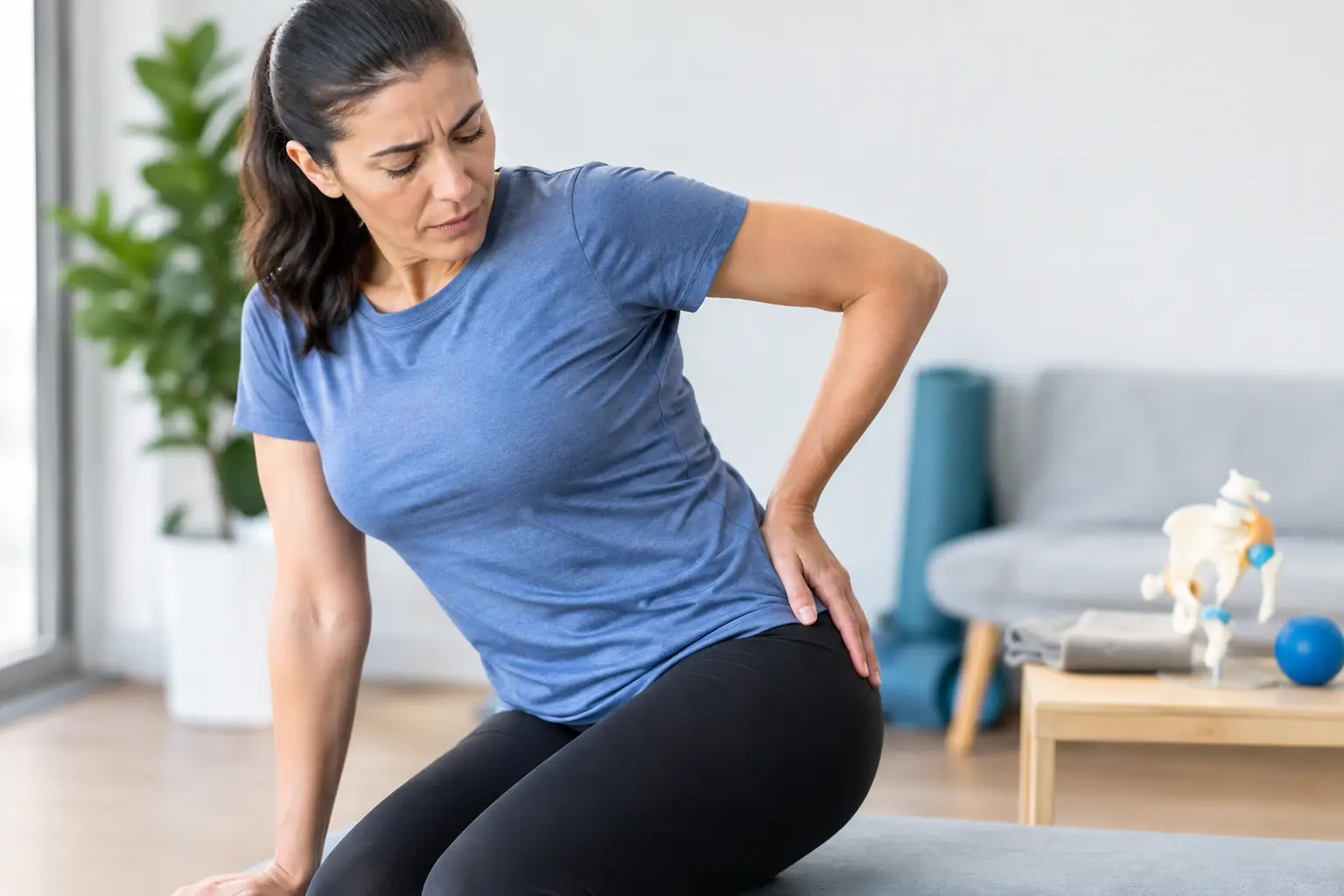
A sharp pinch getting out of the car, a deep ache after a long workday, or pain that shows up halfway through a run can all be called "hip pain." But they rarely have the same cause. The best treatments for hip pain begin by identifying what is actually limiting your movement, loading capacity, and recovery - not simply chasing short-term relief.
For active adults, the goal is bigger than reducing discomfort. It is restoring confident movement, building tissue resilience, and preventing the problem from becoming the reason you stop training, traveling, or doing the things that keep you feeling like yourself.
Why Hip Pain Needs a Root-Cause Assessment
The hip is a high-demand joint surrounded by powerful muscles, tendons, connective tissue, and nerves. Pain in this area may come from the joint itself, but it can also be driven by the lower back, pelvis, glutes, groin muscles, gait mechanics, or a mismatch between your training volume and your current capacity.
For example, pain on the outside of the hip is often related to irritated gluteal tendons or compression around the greater trochanter. Deep groin pain may point toward joint irritation, osteoarthritis, hip impingement, or a labral issue. Pain in the buttock may be referred from the lumbar spine or linked to deep hip rotator dysfunction. Each pattern calls for a different plan.
That is why a high-value assessment combines hands-on examination with movement testing and a clear health history. A clinician should evaluate how you walk, squat, hinge, rotate, climb stairs, and control your pelvis under load. When appropriate, diagnostic imaging or advanced body-composition and movement data can add useful context. The objective is to find the primary driver, the compensations keeping it active, and the recovery factors slowing progress.
The Best Treatments for Hip Pain Are Usually Layered
There is no single treatment that works best for every hip. A precise plan often combines symptom relief with progressive strength, mobility, and recovery strategies. The sequence matters: loading an irritated tendon too aggressively can flare it, while relying only on passive treatment may leave the underlying weakness untouched.
Hands-on care to reduce pain and restore motion
Osteopathic care, chiropractic techniques, and targeted manual therapy can improve joint motion, reduce protective muscle tension, and help calm an irritated nervous system. For someone whose hip has become stiff after long hours at a desk, this may create meaningful short-term relief and make corrective exercise feel more accessible.
Manual therapy works best as part of a broader protocol, not as a stand-alone solution. If a hip feels better after treatment but pain returns every time you walk uphill, run, or sit for two hours, the next step is to address the movement and loading pattern that keeps provoking it.
Massage therapy can also be useful when pain is accompanied by guarding in the glutes, hip flexors, adductors, or low back. It can support circulation, relaxation, and mobility, particularly during periods of high stress or heavy training. It should not be positioned as a way to "break up" an injured tendon or replace progressive rehabilitation.
Progressive strength training for durable results
For many common hip conditions, strength is one of the most effective long-term treatments. The right exercises improve the capacity of the glutes, hamstrings, quadriceps, trunk, and hip stabilizers to absorb force. This matters whether your goal is pain-free walks, stronger deadlifts, or a return to court sports.
A good program is specific to your presentation. Someone with lateral hip pain may start with carefully selected glute isometrics and controlled single-leg stability work. Someone with hip osteoarthritis may benefit from improving leg strength, hip range of motion, and aerobic fitness without repeatedly forcing painful end-range positions. An athlete with groin pain may need progressive adductor strength and rotational control.
The key variable is dosage. Too little load does not build capacity. Too much, too soon can create a flare. Measurable progress comes from adjusting resistance, volume, range of motion, and frequency based on symptoms and performance rather than using a generic exercise sheet.
Movement retraining and load management
Hip pain is often less about one "bad" movement and more about an accumulated load problem. A sudden increase in running mileage, a new high-intensity class, poor recovery, long travel days, or weeks of disrupted sleep can all lower your tolerance for work your body previously handled well.
Movement retraining identifies where force is being lost or transferred inefficiently. You may need to improve pelvic control during a single-leg stance, change a running progression, modify squat depth temporarily, or build better trunk control before returning to rotational sport. Small adjustments can reduce aggravation while you continue moving forward.
Rest has a role, especially during an acute flare, but complete inactivity is rarely the best answer. Relative rest means reducing the specific activity that spikes symptoms while maintaining safe movement and rebuilding capacity through a structured progression.
Shock wave therapy for selected tendon-related pain
Shock wave therapy may be a useful addition for certain chronic tendon conditions, including some cases of greater trochanteric pain syndrome. It delivers acoustic energy to targeted tissue and may help stimulate a healing response when paired with an appropriate loading program.
It is not a shortcut and it is not appropriate for every diagnosis. The strongest results tend to come when shock wave therapy supports, rather than replaces, progressive exercise and clinical reassessment. A thorough evaluation helps determine whether the tissue involved, duration of symptoms, and your overall health profile make it a sensible option.
Recovery, sleep, and metabolic health
Pain does not exist separately from recovery. Poor sleep, elevated stress, inadequate protein intake, low daily activity, and insufficient energy availability can all affect tissue repair, inflammation, and pain sensitivity. These factors are especially relevant when hip pain keeps returning despite otherwise solid treatment.
Wearable data, HRV trends, metabolic testing, and lifestyle tracking can help reveal why recovery is lagging. This does not mean every person with hip pain needs extensive testing. It means that when pain is persistent, recurrent, or paired with fatigue and performance decline, the broader physiology deserves attention.
At Mancuso Clinic, this is where science meets hands-on care: clinical findings, movement capacity, recovery patterns, and health data can be organized into a data-driven protocol rather than treated as separate problems.
When Imaging, Injections, or Surgery May Be Appropriate
Imaging is valuable when it changes the treatment decision. It may be considered after significant trauma, when symptoms fail to improve with appropriate conservative care, or when there is concern for a stress fracture, advanced joint disease, tendon tear, or another structural issue. An image alone does not explain pain, however. Many adults have MRI findings that are not the source of their symptoms.
Injections may provide temporary relief in selected cases, particularly when severe pain prevents sleep, walking, or rehabilitation. The trade-off is that pain reduction can create a false sense of readiness if the underlying capacity problem is not addressed. The decision should be individualized and coordinated with a rehabilitation plan.
Surgery can be the right option for specific structural conditions or advanced joint damage when conservative treatment has been appropriately tried and function remains significantly limited. It is not a failure of care. Still, even surgical outcomes are often better when strength, mobility, body composition, and recovery habits are optimized before and after the procedure.
Do Not Ignore These Hip Pain Signals
Seek urgent medical evaluation for severe pain after a fall, inability to bear weight, fever with a hot or swollen joint, sudden major weakness, numbness in the groin area, or changes in bladder or bowel control. These signs require prompt assessment rather than self-treatment.
For less urgent pain, get evaluated if symptoms persist beyond a few weeks, repeatedly wake you at night, steadily worsen, or limit normal walking and daily activity. Earlier assessment can prevent months of compensation and frustration.
Your hip does not need a generic protocol. It needs a clear explanation, a measurable starting point, and a plan that helps you move with more strength and confidence than you had before pain took over.
Get a Root-Cause Assessment
Find out what is actually driving your hip pain and build a treatment plan tailored to your goals and capacity.
Book OsteopathyWant to know more? Explore our osteopathy services