
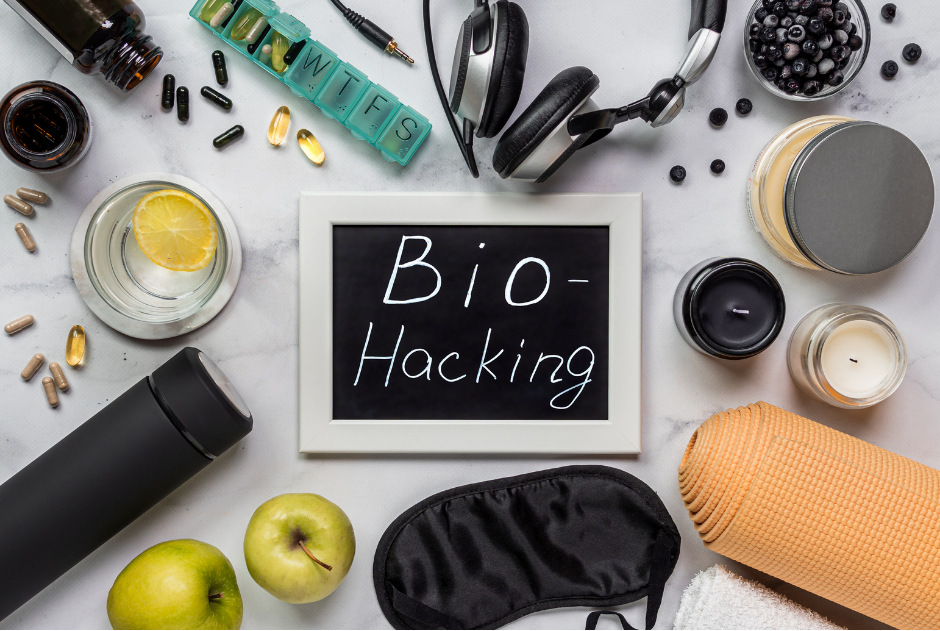
You've tried intermittent fasting because a podcast host swears by it. You've added cold showers after watching a YouTube video. You're taking a stack of supplements based on a Reddit thread. You're biohacking—or so you think.
But here's the reality: biohacking without testing is just expensive guessing. You can't optimize what you don't measure. And when you implement protocols designed for someone else's biology, you're not biohacking your body—you're conducting an uncontrolled experiment with unpredictable outcomes.
The difference between informed optimization and DIY experimentation isn't just semantic. One is based on individual data. The other is based on hope and online anecdotes. One identifies what your body actually needs. The other assumes you respond the same way the influencer does.
The Problem with Protocol-Based Biohacking
Most biohacking content follows the same structure: here's what worked for me, here's the science behind it, here's how you should do it too. The logic seems sound—until you remember that biological systems don't operate on universal rules. What optimizes one person's metabolism can wreck another's.
Research on personalized nutrition has demonstrated significant variability in how individuals respond to identical dietary interventions. Studies show that genotypic and phenotypic characteristics differ substantially among individuals, causing differential responses to food and nutrients. Large-scale trials have found highly variable changes in nutrient intake between participants following the same interventions, with individual variability measures showing mean coefficients of variation exceeding 240%.
This metabolic heterogeneity stems from variations in genetics, epigenetics, microbiome composition, lifestyle factors, and environmental exposures. Advanced computational models analyzing multi-omics data have achieved over 90% accuracy in predicting individual metabolic responses to dietary interventions—but only when personalized data is used as the foundation.
When you follow a generic biohacking protocol without understanding your baseline metabolic function, stress tolerance, or nutrient status, you're not working with data—you're working with assumptions. You assume your mitochondrial function matches the person who created the protocol. You assume your cortisol patterns, insulin sensitivity, and inflammatory markers fall within the range where that intervention is beneficial rather than harmful.
Those are significant assumptions to make without verification.
Why Individual Testing Changes Everything
The foundation of legitimate biohacking isn't intervention—it's assessment. Before you implement any protocol, you need to know what's actually happening in your body right now. Not what you assume is happening based on symptoms. Not what should be happening based on your age or activity level. What is measurably, objectively occurring in your metabolic, hormonal, and physiological systems.
This is where the distinction between biohacking and guessing becomes clear. Data-driven optimization starts with establishing your individual baseline across multiple parameters: metabolic efficiency through breath-by-breath gas exchange analysis, comprehensive biomarker panels through blood testing, immune reactivity patterns through food sensitivity testing.
These measurements don't just tell you where you are—they reveal why certain interventions might help or harm you specifically. Your resting metabolic rate, substrate utilization patterns, and VO2 efficiency determine whether fasting optimizes your metabolism or drives it into protective downregulation. Your cortisol levels, thyroid function, and sex hormone balance determine whether cold exposure enhances resilience or compounds existing stress. Your inflammatory markers and nutrient levels determine whether high-dose supplementation addresses deficiencies or creates new imbalances.
Without this data, you're not optimizing—you're hoping that your biology happens to match the biology of the person whose protocol you're following. That's not biohacking. That's chance.
The DIY Biohacking Movement: Innovation or Risk?
The broader DIY biology movement has brought accessibility to biotechnology—community labs, open-source protocols, democratized genetic testing. But accessibility doesn't equal safety, and innovation doesn't guarantee benefit.
Regulatory bodies and research institutions have raised serious concerns about uncontrolled biohacking experimentation. Studies examining genetic biohacking practices have identified public health risks including interventions with inadequate safety testing, absence of informed consent standards, and introduction of unproven therapies into use. The FDA and international health organizations have noted that self-experimentation often bypasses critical toxicity testing and rigorous pre-clinical evaluation.
Even non-genetic biohacking carries risks when implemented without professional oversight. High-dose supplementation without baseline nutrient testing can create imbalances. Aggressive fasting protocols without metabolic assessment can damage thyroid function. Intense cold exposure without stress capacity evaluation can overwhelm already dysregulated cortisol patterns. These aren't theoretical concerns—they're documented outcomes of intervention without assessment.
The biohacking movement argues for individual autonomy and faster access to optimization strategies. That's a valid goal. But autonomy doesn't require abandoning assessment. Faster access doesn't require skipping foundational testing. The most effective biohackers aren't the ones implementing the most aggressive protocols—they're the ones using data to determine which interventions their specific biology can benefit from.
Evidence-Based Biohacking Exists
Not all biohacking is guesswork. Some interventions have robust scientific support demonstrating measurable physiological benefits—when applied appropriately to individuals whose baseline testing indicates potential benefit.
Photobiomodulation therapy, for example, has extensive research documenting effects on mitochondrial ATP production, cellular signaling pathways, and metabolic outcomes. But even evidence-based interventions require individual context. Red light therapy's benefits depend on tissue penetration, wavelength specificity, dosing protocols, and individual metabolic capacity—factors that vary significantly between people.
Metabolic testing provides objective measurements of oxygen consumption, carbon dioxide production, and substrate utilization—data that reveals your actual energy production efficiency, not your perceived energy levels. Blood biomarker panels quantify inflammation, nutrient status, hormonal function, and organ health—giving you measurable baselines to track intervention effects rather than relying on subjective assessment.
This is the fundamental difference between evidence-based biohacking and DIY experimentation: one uses individual data to guide personalized interventions with measurable outcomes. The other uses generic protocols with hoped-for results and subjective progress tracking.
What Optimization Actually Requires
If you're serious about biohacking—about genuine optimization rather than protocol collection—the process doesn't start with intervention. It starts with comprehensive assessment. You need to know your metabolic efficiency, your nutrient status, your inflammatory state, your hormonal balance, your stress resilience. You need objective measurements, not symptom checklists.
Then, and only then, can you make informed decisions about which interventions match your biological needs. Maybe your metabolic testing reveals exceptional fat oxidation capacity and strong VO2 efficiency, suggesting potential benefit from time-restricted eating. Maybe your blood work shows subclinical hypothyroidism and cortisol dysregulation, indicating that aggressive fasting would compound existing metabolic suppression. Maybe your food sensitivity panel identifies immune reactions driving chronic inflammation, revealing that supplement stacking won't address the root immune activation.
You can't know any of this without testing. And without knowing it, you're not biohacking—you're implementing someone else's protocol and hoping it transfers to your biology. That's not optimization. That's trial and error with your metabolic health as the experiment.
The biohacking movement promised personalized optimization. But personalization requires personal data. Without it, you're just following generic protocols with a trendy name.
Measure First, Optimize Second
PNOĒ metabolic testing provides breath-by-breath analysis of your actual energy production, substrate utilization, and metabolic efficiency—the foundation for data-driven biohacking instead of protocol guessing.
Learn About Metabolic Testing