
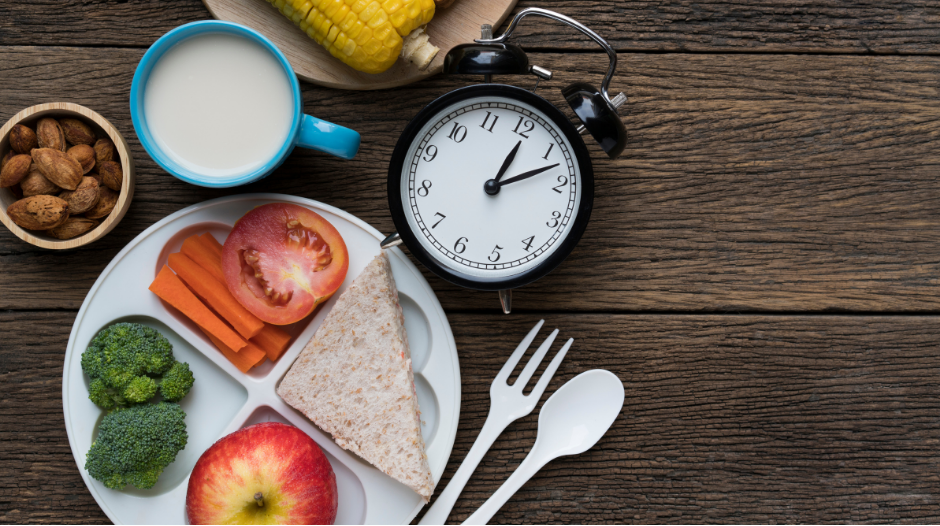
You're eating clean. Hitting your macros. Tracking protein. But you're still crashing at 3 PM. Your workouts feel harder than they should. Your sleep is restless. Your energy is unpredictable.
The problem might not be what you're eating. It might be when.
Most people focus on food quality—organic, whole foods, balanced macros. That matters. But meal timing—when you eat relative to your circadian rhythm—affects insulin sensitivity, cortisol regulation, performance, and recovery just as much as food composition. Maybe more.
Recent research in chrononutrition shows that meal timing plays a crucial role in determining metabolic health, with eating patterns interacting directly with your body's internal circadian clocks to influence energy balance, glucose metabolism, and cardiometabolic risk.
Your Body Runs on a 24-Hour Clock (And Food Is a Major Time Cue)
Your circadian rhythm is an internal 24-hour biological clock controlled by the suprachiasmatic nucleus (SCN) in your brain. This master clock regulates sleep-wake cycles, hormone release, body temperature, and metabolic function.
But here's what most people don't know: every organ has its own peripheral clock. Your liver, pancreas, gut, and muscles all have independent circadian rhythms that control when they're most efficient at processing nutrients.
Light is the primary cue that sets your master clock. But food is the primary cue that sets your peripheral clocks. Research shows that meal timing acts as a powerful synchronizer for peripheral circadian rhythms in metabolic tissues, independent of the central clock.
When you eat at consistent times aligned with your circadian rhythm, your peripheral clocks sync with your master clock. Insulin sensitivity peaks when you need it. Digestive enzymes are ready. Metabolic pathways are primed.
When you eat erratically—late dinners, skipped breakfasts, midnight snacks—your peripheral clocks desynchronize from your master clock. This is called circadian misalignment, and it's metabolically disastrous.
The Same Meal Eaten at Different Times Produces Different Metabolic Responses
Here's the key insight: your body processes food differently depending on when you eat it.
Studies show that identical meals consumed in the morning versus the evening produce significantly different glycemic and insulinemic responses, likely reflecting circadian fluctuations in pancreatic beta-cell activity and insulin sensitivity.
Your insulin sensitivity is highest in the morning. It declines throughout the day and hits its lowest point late at night. This means:
- Morning: High insulin sensitivity. Your body efficiently shuttles glucose into cells. Blood sugar stays stable. Energy is sustained.
- Evening: Low insulin sensitivity. The same meal causes bigger blood sugar spikes. More insulin is needed to clear glucose. Energy crashes harder.
- Late night: Insulin sensitivity is at its worst. Eating triggers exaggerated glucose and insulin responses. Fat storage is favored over fat oxidation.
This isn't theory. A 2025 study found that people who consumed their main calories later in the day showed poorer insulin sensitivity and higher risk markers for type 2 diabetes, even when total calorie intake and food quality were controlled.
Late Eating Tanks Your Glucose Metabolism
If you eat most of your calories after 5 PM, your metabolic health suffers—even if your total calorie intake and body weight stay the same.
Research on adults with prediabetes and type 2 diabetes found that consuming more energy after 5 PM was associated with significantly poorer glucose tolerance, independent of body weight, fat mass, or total energy intake.
Why? Because you're eating when insulin sensitivity is low and melatonin (the sleep hormone) is rising. Studies show that consuming dinner at 9 PM versus 6 PM resulted in higher postprandial glucose and insulin levels in people with type 2 diabetes—same meal, different time, worse metabolic response.
The mechanism: melatonin inhibits insulin secretion. As melatonin rises after sunset, your pancreas becomes less responsive. Eating during this window means your body can't clear glucose efficiently, leading to prolonged blood sugar elevation and increased insulin demand.
Over time, this pattern promotes:
- Insulin resistance
- Fat storage (especially visceral fat)
- Increased inflammation
- Higher risk of type 2 diabetes and cardiovascular disease
Skipping Breakfast = Cortisol Spike + Energy Crash
Breakfast isn't just "the most important meal of the day" marketing. It's a circadian signal.
When you skip breakfast, you're ignoring the time when insulin sensitivity is highest. You're also prolonging the fasted state into the morning, which keeps cortisol elevated longer than it should be.
Cortisol naturally peaks in the morning to help you wake up. That's normal. But research indicates that meal timing affects cortisol regulation, and skipping breakfast can dysregulate this rhythm, keeping you in a prolonged stress response.
The pattern looks like this:
- Wake up → cortisol peaks (normal)
- Skip breakfast → cortisol stays elevated (not normal)
- Mid-morning → cortisol-driven energy feels wired but unsustainable
- Afternoon → cortisol crashes, energy tanks, cravings spike
- Evening → eat large meal when insulin sensitivity is low, blood sugar spikes, sleep quality suffers
This is circadian misalignment in action. You're asking your body to run on stress hormones when it should be running on food-derived energy.
Eating Late Disrupts Sleep (Which Disrupts Everything Else)
Late-night eating doesn't just affect glucose metabolism. It wrecks your sleep.
Eating triggers thermogenesis (heat production) and elevates core body temperature. Sleep requires a drop in core body temperature. When you eat close to bedtime, you're physiologically preventing the temperature drop needed for deep sleep.
Additionally, digestion activates the sympathetic nervous system (fight-or-flight), which is the opposite of what you need for sleep (parasympathetic, rest-and-digest). Late eating keeps you in a semi-alert state, reducing sleep quality even if you fall asleep on time.
Poor sleep then:
- Lowers insulin sensitivity the next day
- Increases hunger hormones (ghrelin) and decreases satiety hormones (leptin)
- Elevates cortisol
- Impairs recovery from training
- Reduces HRV (heart rate variability), signaling poor autonomic balance
You wake up unrested. Your energy is off. Your performance suffers. And the cycle repeats.
The 3 PM Energy Crash Isn't Normal—It's a Meal Timing Problem
If you need coffee or sugar every afternoon just to stay functional, that's not normal fatigue. That's blood sugar dysregulation driven by poor meal timing.
Here's the typical pattern:
- Morning: Skip breakfast or eat minimal protein/fat. Blood sugar stays low or spikes briefly then crashes.
- Lunch: Eat a carb-heavy meal (sandwich, pasta, rice bowl). Blood sugar spikes. Insulin surges. Blood sugar crashes 2-3 hours later.
- 3 PM: Energy plummets. Brain fog sets in. You reach for coffee, sugar, or both.
- Evening: Overeat to compensate for afternoon crash. Late dinner. Poor sleep. Repeat.
The fix isn't more caffeine. It's aligning meal timing and composition with your circadian rhythm.
What Optimal Meal Timing Looks Like
Optimal meal timing aligns with your circadian rhythm and supports metabolic health, energy stability, and recovery. Here's the framework:
1. Eat Within 1-2 Hours of Waking
Break the overnight fast when insulin sensitivity is highest. This signals your peripheral clocks that the active phase has started, synchronizes cortisol regulation, and provides sustained energy.
What to eat: Protein + fat + fiber. Avoid carb-heavy breakfasts that spike blood sugar early. Eggs, Greek yogurt, avocado, nuts, berries, vegetables.
2. Front-Load Calories Earlier in the Day
Eat your largest meal at breakfast or lunch, not dinner. Research shows that providing a higher proportion of daily calories in the morning results in lower hunger throughout the day and better metabolic outcomes.
Your body is metabolically primed to handle calories in the morning and afternoon. Use that window.
3. Finish Eating 3-4 Hours Before Bed
Stop eating by 6-7 PM if you sleep at 10-11 PM. This allows digestion to complete, core body temperature to drop, and melatonin to rise without interference from food intake.
Late eating after 8 PM consistently correlates with worse glucose tolerance, higher insulin resistance, and impaired sleep quality.
4. Maintain Consistent Meal Times
Eat at roughly the same times every day. Studies show that a week of altered meal schedules can disrupt circulating glucose rhythms and hunger patterns, creating metabolic instability.
Consistency synchronizes your peripheral clocks. Erratic eating desynchronizes them.
5. Use an Eating Window of 10-12 Hours
Compress your eating into a consistent 10-12 hour window (e.g., 7 AM to 6 PM). This isn't extreme intermittent fasting—it's just avoiding the modern pattern of eating from 7 AM to 10 PM.
This gives your body a true fasting period overnight, allowing metabolic recovery, cellular repair (autophagy), and restoration of insulin sensitivity.
What to Do Right Now
You don't need to overhaul everything. Start with one shift:
- If you skip breakfast: Start eating within 1-2 hours of waking. Protein + fat + fiber. Track your energy levels for a week.
- If you eat late dinners: Move dinner to 6-7 PM. Finish eating 3-4 hours before bed. Monitor sleep quality and morning energy.
- If you have afternoon crashes: Front-load calories to breakfast and lunch. Reduce carb-heavy lunches. Avoid relying on caffeine to mask the crash.
Test, Don't Guess
Meal timing affects blood sugar, cortisol, insulin sensitivity, and energy balance. If you want to optimize, measure:
- Continuous glucose monitoring (CGM): Track how meal timing affects your blood sugar responses throughout the day.
- Metabolic testing: Measure resting metabolic rate, substrate utilization (fat vs. carb burning), and VO2 max to see if poor meal timing is impairing metabolic efficiency.
- Cortisol testing: 4-point salivary cortisol throughout the day reveals if your stress hormone rhythm is dysregulated from meal timing issues.
Meal timing isn't a minor detail. It's a primary regulator of metabolic health, energy stability, and recovery capacity. You can eat the "right" foods at the wrong times and still feel terrible.
Align your eating with your circadian rhythm. Your energy, performance, and recovery will follow.
Find Out What's Actually Driving Your Energy Crashes
Blood sugar instability, cortisol dysregulation, and metabolic inefficiency all show up in testing—not guessing. Continuous glucose monitoring, metabolic testing, and hormone panels reveal what's actually happening.
Book Your Free Discovery Session