
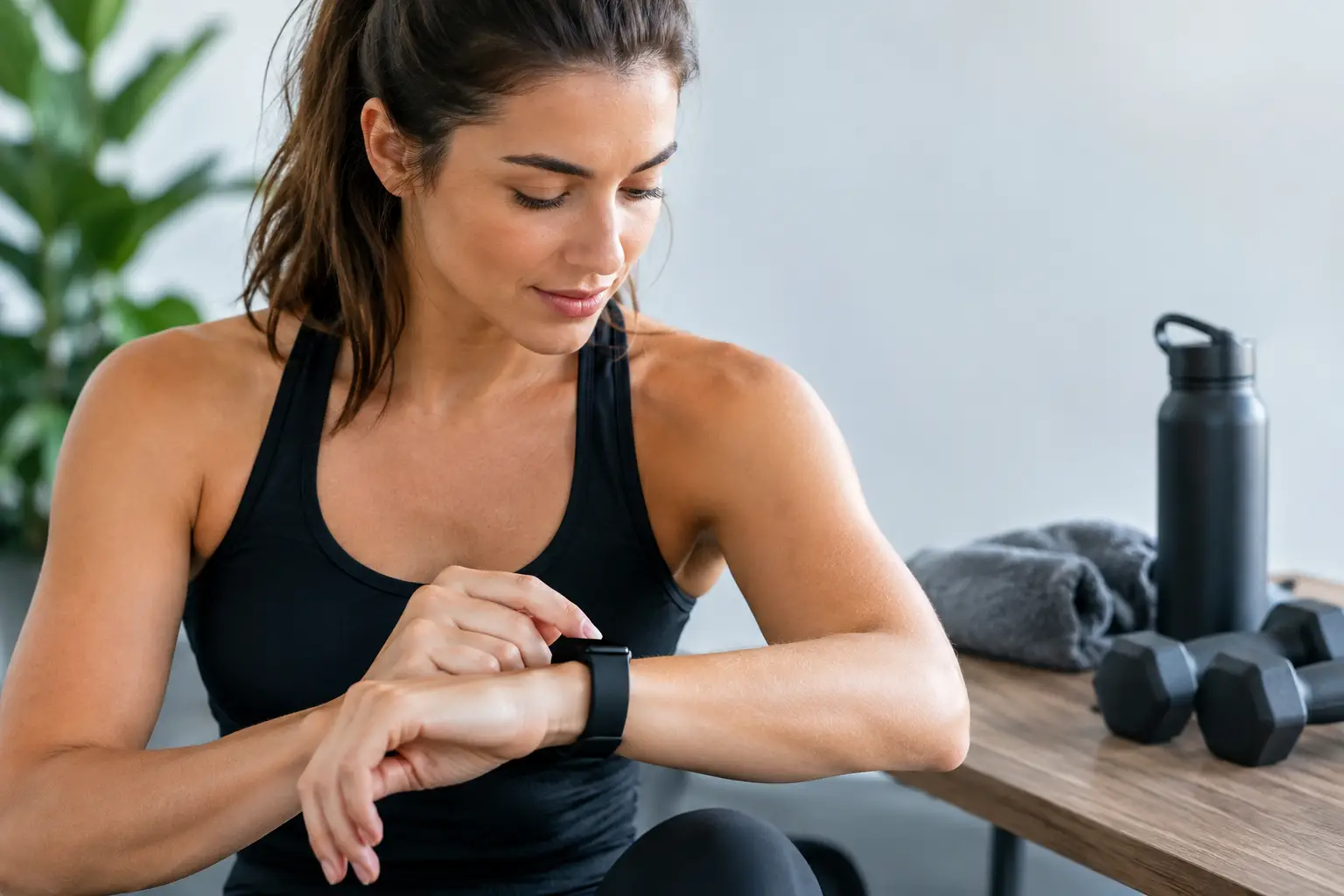
A hard workout is not always the reason you feel flat. Poor sleep, travel, work pressure, lingering pain, under-fueling, alcohol, illness, and a training load that quietly outpaced your capacity can all change how your body responds. Wearables for recovery tracking make those signals more visible, giving you a practical starting point for deciding whether today calls for intensity, maintenance, or a deliberate reset.
For active adults, the value is not a daily readiness score by itself. The value is recognizing patterns early enough to adjust before fatigue becomes a performance plateau, recurring stiffness, or an injury that forces time away from the activities you enjoy.
What Wearables for Recovery Tracking Actually Measure
Most recovery-focused devices collect data while you sleep and throughout the day. Depending on the device, that may include resting heart rate, heart rate variability or HRV, sleep duration and timing, respiratory rate, skin temperature trends, activity load, and movement. Some also estimate blood oxygen saturation, stress, or calorie expenditure.
These metrics are useful because recovery is not one thing. It is the combined state of your nervous system, sleep quality, tissue tolerance, energy availability, and overall stress load. A wearable cannot directly measure every part of that equation. It can, however, show when your normal baseline has shifted.
That distinction matters. A single low HRV reading does not diagnose overtraining. One restless night does not mean your program has failed. The most useful data comes from trends compared with your own normal values, alongside how you feel, move, and perform.
HRV: A window into stress and adaptation
HRV measures the small changes in time between heartbeats. In general, a stable or improving personal HRV trend may suggest that your nervous system is handling current demands well. A sustained drop, particularly when paired with a higher resting heart rate, poor sleep, or unusual fatigue, may signal that recovery capacity is under pressure.
HRV is highly individual. Comparing your score with a colleague's or an online benchmark is rarely productive. Your baseline, your training history, your medications, your work stress, and your sleep habits all shape the number. The question is not, "Is this HRV good?" It is, "What does this change mean for me?"
Sleep: More than hours in bed
Wearables can estimate sleep duration, consistency, interruptions, and stages. The exact sleep-stage labels should be treated as estimates, not a clinical sleep study. Yet the larger pattern is often actionable: shortened sleep, irregular bedtimes, repeated awakenings, or a falling sleep score after late meals, alcohol, travel, or high evening stress.
For recovery, consistency often beats the occasional perfect night. If your device repeatedly shows six hours of fragmented sleep before your most demanding training sessions, the answer may not be another supplement. It may be a more realistic training schedule and a better protected sleep window.
Resting heart rate, temperature, and respiratory trends
A higher-than-normal resting heart rate can appear after intense sessions, dehydration, insufficient sleep, emotional stress, or the early stages of illness. Changes in skin temperature and respiratory rate can add context. When several markers move in the wrong direction at once, it is usually wiser to reduce demand than to push through a planned hard session.
These signals are not diagnostic tools. Persistent changes, especially when accompanied by chest symptoms, shortness of breath, fainting, fever, or severe fatigue, require medical assessment rather than self-management through an app.
Turning Recovery Data Into Better Decisions
The best recovery plan does not obey a wearable blindly. It uses the data to ask better questions, then combines it with training load, pain levels, mood, motivation, and objective clinical assessment.
Start by establishing a baseline. Wear the device consistently for at least two to four weeks before making major changes based on its recommendations. Keep notes on high-intensity training, travel, alcohol, late meals, menstrual-cycle changes if relevant, illness, and unusually stressful work periods. This context turns isolated numbers into useful patterns.
Then create simple decision rules. If your recovery markers are normal and your body feels capable, proceed with the planned session. If one metric is off but you feel good, consider reducing volume rather than canceling movement entirely. If several metrics are suppressed and you feel run down, choose low-intensity aerobic work, mobility, breathwork, or rest.
Pain changes the equation. A high readiness score does not give a green light to train through sharp pain, progressive weakness, joint instability, or symptoms that alter your movement. Wearables measure physiological signals, not tissue integrity or movement quality. Hands-on assessment remains essential when discomfort keeps returning.
The Limits of Recovery Scores
Recovery scores are appealing because they simplify complex physiology into a single number. They are also easy to overinterpret. Different devices use different algorithms, so a score from one platform cannot be directly compared with another. Wrist fit, sensor quality, sleeping position, tattoos, skin temperature, and movement can affect readings.
There is also a risk of becoming overly reactive. Seeing a low score can create anxiety that worsens sleep and recovery, a pattern sometimes called the nocebo effect. Data should increase agency, not make you feel controlled by your device.
Use the score as a prompt, not a verdict. If the device says you are under-recovered but you have slept well, feel energized, and have a stable baseline, a modified workout may be appropriate. If it says you are ready but your low back is flaring after long workdays, forcing intensity may be the wrong call.
Build a Recovery System, Not a Gadget Collection
The right device is the one you will wear consistently and understand well enough to use. For many people, a smartwatch or ring that captures overnight HRV, resting heart rate, and sleep timing is sufficient. Athletes who want deeper training-load analysis may prefer a device with more detailed exercise data. People who dislike wearing a device overnight may benefit from a chest-strap measurement during morning checks, though consistency is still the priority.
Before choosing, consider sensor comfort, battery life, the metrics you will actually review, privacy settings, and whether the device supports your goal. More data is not automatically better. A simple setup with three meaningful trends can be far more effective than a dashboard full of numbers you never act on.
At Mancuso Clinic, wearable inputs can become part of a broader root-cause assessment. A recovery trend gains value when it is considered alongside movement screening, pain history, metabolic health, body-composition data, sleep habits, and training demands. That is how data-driven protocols move beyond generic advice and toward decisions that fit your physiology.
A Practical Weekly Review
Rather than checking your metrics compulsively, review them at the same time each week. Look for the relationship between your recovery trend and your real life. Did your resting heart rate climb after adding extra conditioning? Did HRV improve when you moved your bedtime 30 minutes earlier? Does a demanding work week predict a flare-up in neck tension or low-back stiffness?
Use what you find to make one focused adjustment for the next seven days. That might mean moving your hardest session away from a poor-sleep night, adding a recovery walk after travel, increasing protein and hydration after long training sessions, or scheduling manual therapy when a pattern of restricted movement returns. Measure the response, then refine.
The best wearable does not tell you to do more. It helps you recognize when doing less, sleeping deeper, moving differently, or getting the right clinical support is the faster route to lasting performance.
Start With Your Free Health Discovery
Get a personalized assessment to understand your current recovery capacity and build a data-driven plan that works for your life.
Book Free Health DiscoveryWant to know more? Learn about our approach