
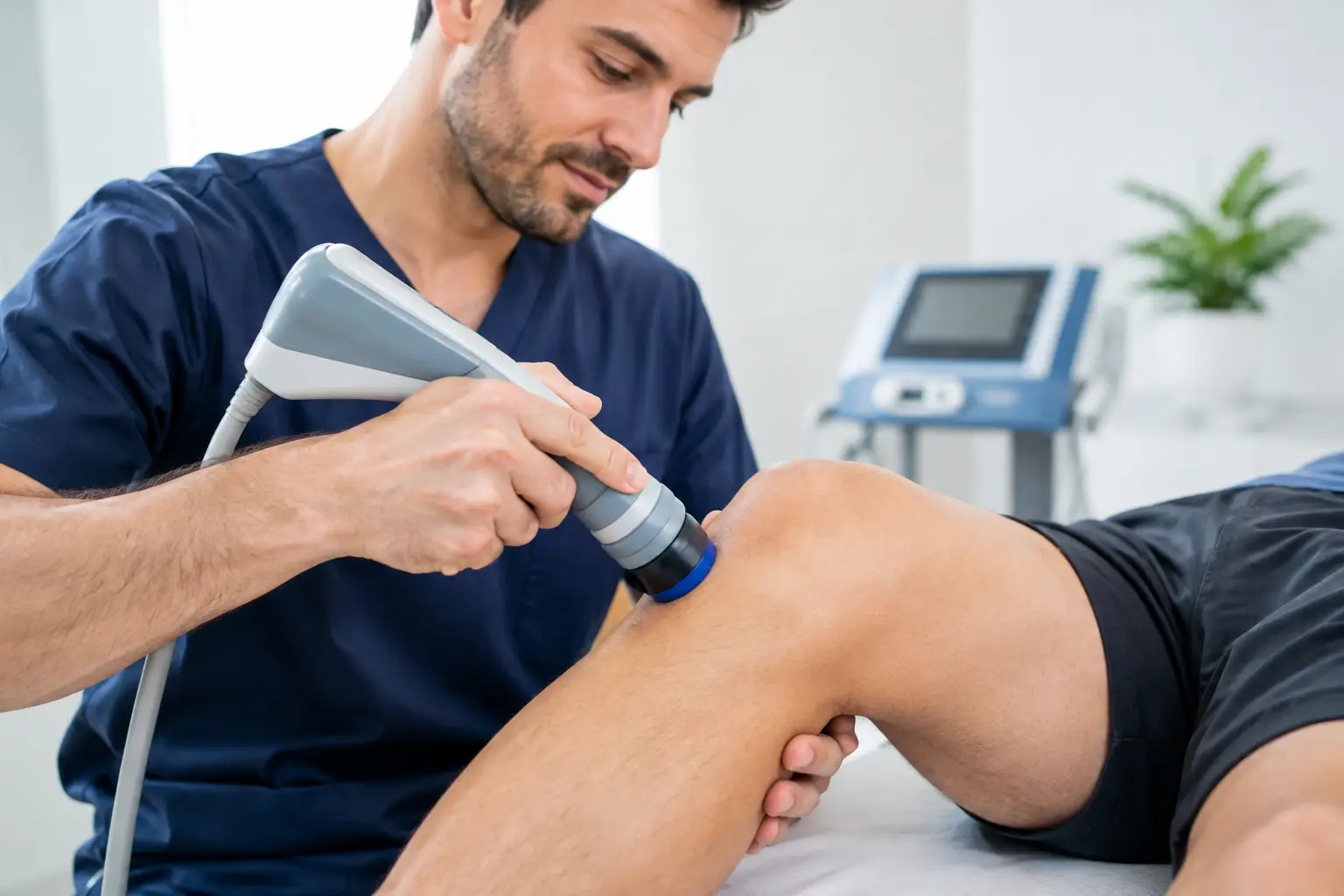
At Mancuso Clinic in Moncton, we use shockwave therapy for stubborn tendon pain such as plantar fasciitis, tennis elbow and Achilles problems, as one part of a plan that also includes hands-on care and progressive loading. Here is what the treatment really feels like.
A sharp, rhythmic tapping sensation over an already sensitive tendon can sound intimidating, especially if you are trying to get back to training, running, lifting, or simply moving without pain. So, does shockwave hurt? It can be uncomfortable, but it should not feel unbearable. In a well-designed treatment plan, the sensation is carefully adjusted to your tissue tolerance, condition, and recovery goals.
Shockwave therapy is not a passive spa treatment. It is a clinical modality designed to stimulate a healing response in targeted tissue. That means you may feel something during treatment. The more useful question is not whether you will feel it, but whether the intensity is appropriate, productive, and matched to the root cause of your pain.
What Shockwave Therapy Actually Feels Like
Shockwave therapy, also called extracorporeal shockwave therapy or ESWT, delivers acoustic pressure waves into an area of tissue. Depending on the device and treatment target, those waves may feel like rapid pulses, firm tapping, snapping, or deep percussion.
Most people describe the experience as intense but manageable. The sensation is usually strongest directly over the injured or most sensitive tissue, such as a chronically irritated tendon attachment. It may be less noticeable in surrounding muscle. A session commonly lasts only a few minutes per treatment area, which also makes the intensity easier to tolerate than many people expect.
Pain during shockwave is not a measure of whether the treatment is working. More force is not automatically better. The goal is to deliver enough energy to create a meaningful stimulus without overwhelming the nervous system or irritating the tissue beyond its current capacity.
Does Shockwave Hurt More for Some Conditions?
Yes. Your diagnosis, tissue sensitivity, and stage of recovery all influence how shockwave feels. Areas with chronic tendon pain can be especially tender because the treatment is being applied where the body has lost normal load tolerance.
Plantar fasciitis, Achilles tendinopathy, tennis elbow, patellar tendinopathy, and certain shoulder tendon conditions are common reasons clinicians use shockwave. In these cases, discomfort can be more noticeable over the specific tendon or attachment point. Calcific deposits in the shoulder may also be sensitive during treatment.
That said, pain is not the whole story. A person with a highly irritable condition, poor sleep, persistent stress, or a sensitized nervous system may experience a lower tolerance even when imaging or tissue findings appear modest. Conversely, an athlete with a longstanding tendon issue may tolerate a stronger session yet still need a gradual return-to-loading plan. Precision care means accounting for both the local tissue and the system around it.
Focused vs. Radial Shockwave Sensation
There are different forms of shockwave therapy, and they do not feel identical. Radial pressure wave therapy tends to spread energy more broadly through superficial tissue and often feels like firm, fast percussion. Focused shockwave therapy delivers energy more precisely and can reach deeper targets, sometimes creating a sharper or more concentrated sensation.
Neither is universally better. The appropriate approach depends on the tissue being treated, the depth of the problem, your clinical assessment, and the desired treatment effect. A skilled provider selects the modality and settings instead of applying the same protocol to every painful area.
How Clinicians Keep Treatment Tolerable
A high-quality session begins before the device is turned on. The clinician should identify the painful structure, assess movement, palpate the area, and determine whether shockwave is appropriate that day. Treatment settings can then be adjusted in real time based on your response.
At Mancuso Clinic, shockwave is best viewed as one part of a data-driven recovery strategy, not a stand-alone fix. Hands-on assessment, movement patterns, training load, sleep, stress, nutrition, and recovery capacity all affect why pain persists and how quickly tissue can adapt.
During treatment, you should communicate clearly if the sensation becomes too sharp, causes guarding, or feels like it is escalating rather than settling. Your provider can lower the intensity, alter the treatment location, change the angle, or build up gradually over future sessions. There is no advantage to gritting your teeth through a session that exceeds your tolerance.
A useful rule: treatment discomfort should remain controlled and temporary. You may feel challenged, but you should still be able to breathe normally and relax the surrounding muscles rather than brace against every pulse.
What Happens After a Shockwave Session?
Some soreness after shockwave is common, particularly after the first session or when treating a tender chronic tendon. It may feel similar to the aftermath of deep manual therapy or an unfamiliar workout. For many people, this settles within 24 to 48 hours.
Occasionally, the treated area can feel more sensitive for a few days before it improves. This does not automatically mean the treatment failed. Shockwave is intended to influence biological activity in the tissue, and recovery is rarely linear. However, significant swelling, severe pain, numbness, unusual bruising, or symptoms that continue to worsen should be reported to your clinician promptly.
Your post-treatment plan matters. Depending on the condition, your provider may recommend modified activity for a short window, followed by progressive strength and mobility work. Tendons, fascia, and other connective tissues generally respond best when treatment is paired with intelligently dosed loading, not when the underlying movement or training problem is ignored.
How to Prepare If You Are Nervous About Pain
If you are concerned about your first shockwave session, tell the clinician before treatment begins. Anxiety can raise muscle tension and amplify discomfort, while a clear plan often makes the experience much easier.
Wear clothing that allows easy access to the treatment area, arrive hydrated, and avoid scheduling a maximal training session immediately beforehand if the area is already irritated. Ask what type of shockwave device will be used, what sensation is expected, and how the treatment intensity will be progressed. These are reasonable questions, not signs that you are being difficult.
Avoid taking anti-inflammatory medication solely to push through a session unless your prescribing clinician has advised it. For some conditions, inflammation management and medication use need to be considered carefully within the larger treatment plan. Your provider should review your health history, medications, and relevant risk factors before proceeding.
When Shockwave May Not Be the Right Choice
Shockwave is not appropriate for every person or every type of pain. A careful screening process is essential, particularly if you are pregnant, have a bleeding disorder, use certain anticoagulant medications, have a known tumor or active infection near the treatment area, or have reduced sensation that could make it difficult to report excessive discomfort.
The treatment also needs diagnostic clarity. Pain that comes from a stress fracture, acute tear, nerve compression, inflammatory arthritis, or another condition may require a different first step. Treating the site of pain without understanding the source can delay the care you actually need.
This is where a root-cause approach changes the conversation. Instead of asking only, “Can shockwave make this hurt less?” ask what is driving the tissue overload in the first place. It may be restricted mobility, poor force distribution, weak capacity, a rapid jump in training volume, inadequate recovery, or a broader metabolic and stress-related recovery deficit.
The Bottom Line on Shockwave Pain
Shockwave therapy can be uncomfortable, especially when it is applied to sensitive, chronically overloaded tissue. But it should be controlled, brief, and individualized, not a test of pain tolerance. The best results come from matching the right modality and dose to the right diagnosis, then supporting the treatment with progressive movement, recovery, and objective reassessment.
If you are considering shockwave, choose a provider who will assess more than the painful spot. A thoughtful plan should make you feel informed, in control, and confident that each session is moving you toward stronger, more resilient movement.
Frequently Asked Questions
How many shockwave sessions will I need?
Many treatment plans use 3 to 6 sessions, about a week apart. The right number depends on your condition and how your tissue responds, so your clinician reassesses as you go.
Can I walk or train after a session?
Most people return to normal daily activity the same day. Your clinician may ask you to reduce high-impact training for 24 to 48 hours.
Is shockwave therapy covered by insurance?
Coverage varies from plan to plan. Ask your insurer whether shockwave therapy is covered and under which type of practitioner. Our front desk can give you a detailed receipt for your claim.
Where can I get shockwave therapy in Moncton?
Mancuso Clinic offers shockwave therapy at Suite 110, 33 Foundry Street, Moncton. Every plan starts with an assessment to confirm shockwave is the right fit for your pain.
Wondering If Shockwave Fits Your Pain?
We start with an assessment to see whether shockwave belongs in your plan, and how to keep each session comfortable.
Explore Shockwave TherapyNot sure which service is right for you? Find your health path